

Disney Dining Plan: Our Complete Guide for UK Families
The Disney Dining Plan sounds relatively simple. You receive a set number of meals and snacks as part of your Walt Disney World package and use them throughout your stay. In reality, deciding whether the Dining Plan represents good value is much more personal than that.
We've travelled to Walt Disney World both with and without the Dining Plan. We've eaten everywhere from relatively inexpensive Quick-Service meals to character breakfasts and Signature Dining restaurants requiring two Table-Service credits, which has given us a good opportunity to compare how the numbers work in practice.
For us, the Dining Plan can offer excellent value, particularly when it's included as part of a UK Disney package. However, that doesn't mean it will automatically save every family money.
The important question isn't how much food you can squeeze out of every credit. It's how your family would genuinely eat at Walt Disney World if you didn't have the Dining Plan.
That's what we'll look at in this guide: how the Disney Dining Plan works, what you actually get, how we use it as a family and what our own Disney food bills tell us about its value.
What Is the Disney Dining Plan?
The Disney Dining Plan allows eligible Walt Disney World Resort guests to include much of their food within their holiday package rather than paying separately for every eligible meal once they arrive.
You receive a number of meal and snack credits based on the number of nights included in your Disney Resort stay. The important word there is nights.
Your allocation is based on nights rather than the number of park days you have. You don't have to use a specific set of credits every day either. Your remaining meals and snacks carry across the stay and expire at midnight on your checkout day. That flexibility is one of the reasons we've been able to make the Dining Plan work particularly well for our family.
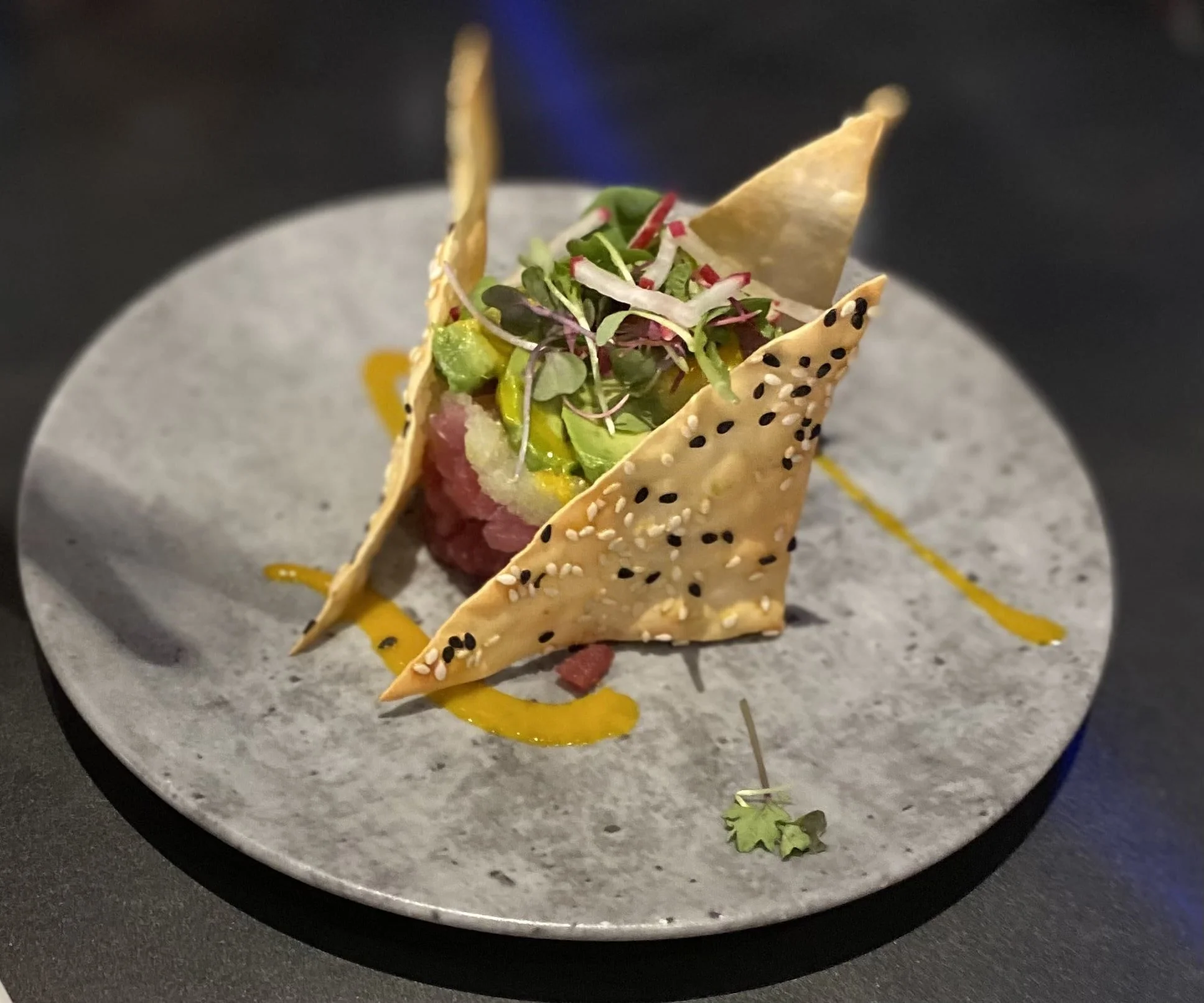
Tuna Tartare at Space 220
Which Disney Dining Plans Are Available?
There are currently two main Dining Plan options: the Disney Quick-Service Dining Plan and the Disney Dining Plan. However, for 2027, Disney is also introducing a third option, the Deluxe Table-Service Dining Plan.
Disney Quick-Service Dining Plan
For each night of the stay, each eligible guest aged three and over receives:
2 Quick-Service meals
1 snack or eligible non-alcoholic drink
A Resort-Refillable Drink Mug for the stay
This option works particularly well for families who don't want to build their Disney holiday around restaurant reservations. It gives you the freedom to eat around your park plans and generally spend less time sitting down for longer meals.
Disney Dining Plan
For each night of the stay, each eligible guest aged three and over receives:
1 Table-Service meal
1 Quick-Service meal
1 snack or eligible non-alcoholic drink
A Resort-Refillable Drink Mug for the stay
This is the plan we've used and therefore the one the majority of this guide is based on. We enjoy Table-Service restaurants and some character dining, while the Quick-Service and snack credits give us flexibility around the rest of the day.
Some Signature Dining restaurants and selected other dining experiences require two Table-Service credits per person rather than one. That changes how you need to plan your credits, which we'll come back to later.
New for 2027: Deluxe Table-Service Dining Plan
From 2027, Disney is adding a Deluxe Table-Service Dining Plan, which includes:
2 Table-Service meals
1 Quick-Service meal
1 snack or eligible non-alcoholic drink
A Resort-Refillable Drink Mug for the stay
We haven't used this plan, so we're not going to tell you whether it's good value based purely on what it includes. However, it's an interesting addition, particularly for families who enjoy regular Table-Service dining, character meals or want to include some of Disney's two-credit restaurants.
The rest of this guide is based primarily on the Dining Plan we've actually used.
What Does a Dining Plan Meal Include?
For a standard Quick-Service meal, you'll generally receive an entrée and an eligible drink.
At Table-Service restaurants, breakfast generally includes an entrée and eligible drink, or the relevant buffet or family-style meal. At lunch and dinner, a Table-Service credit generally includes an entrée, dessert and eligible drink, or the applicable buffet or family-style meal.
Guests aged 21 and over can choose an eligible alcoholic beverage with their meal where available. Younger guests can choose from the eligible non-alcoholic options.
Not absolutely everything on every menu is necessarily included, so we always check what our Dining Plan covers at the individual restaurant rather than assuming.
How Do Dining Plan Credits Work Across Your Holiday?
One of the most useful things to understand is that the Dining Plan isn't a rigid daily meal schedule.
If you receive one Table-Service credit per person per night, you don't have to use exactly one Table-Service credit every calendar day. Your allocation is available across your stay, giving you much more flexibility in how you use it.
We had the Disney Dining Plan for ten nights on our latest trip, but we didn't simply eat one Table-Service meal, one Quick-Service meal and one snack every day in a fixed pattern. Instead, we planned the restaurants and experiences we wanted and then worked out how our credits could fit around them. That included eating at both Jiko – The Cooking Place and Flying Fish, which required two Table-Service credits for each adult Dining Plan redemption.
We finished this trip with only a couple of Quick-Service credits unused. On a previous trip using the Dining Plan, we had no credits left at the end. That doesn't mean we used the plan less successfully this time. We simply had a different Disney holiday.
Is the Disney Dining Plan Actually Good Value?
There isn't a universal yes or no answer. If you would otherwise eat mostly inexpensive meals, share food, spend significant time away from Disney property and rarely book Table-Service restaurants, paying to add a Dining Plan could potentially cost more than simply paying for the food you would naturally choose. Our family tends to eat differently.
Before we had the Dining Plan, we'd already experienced what a Disney holiday cost when we simply booked the restaurants we wanted and paid as we went. On one previous trip without the Dining Plan, we spent approximately £3,000 on food over roughly 12 Disney days. There is an important caveat to that figure. We weren't trying to eat Walt Disney World as cheaply as possible. We ate what we wanted to eat and booked the Table-Service restaurants we wanted to experience.
We're certainly not suggesting that every family needs to budget £3,000 for Disney food. You can spend considerably less. What that trip gave us was a useful baseline for our family.
When the Dining Plan subsequently became available to us, we already knew how we naturally ate at Disney. We weren't comparing the Dining Plan with a hypothetical holiday where we'd suddenly stop eating at Table-Service restaurants and share inexpensive meals every day just to make paying out of pocket appear cheaper.
We knew that if we travelled and ate in a similar way again, food would represent a substantial additional cost, potentially even more as restaurant prices increased. That's why the Dining Plan became particularly attractive to us.
How Much Can Eating at Disney Actually Cost?
This is where real examples are much more useful than simply producing one average Disney food budget. Disney dining can become expensive very quickly, but it is also possible to eat much more economically.
On our latest trip, a Quick-Service meal for the four of us at D-Luxe Burger would have cost around $125 for the food we ordered if we'd paid out of pocket. That's worth remembering because Quick-Service doesn't automatically mean cheap when you're feeding a family.
By comparison, on another trip we ate at Blaze Pizza, where the equivalent out-of-pocket cost for three pizzas, two children's meals, a beer and a glass of wine was around $60. That's a significant difference.
Our Table-Service receipts vary even more. We've had family meals where the equivalent menu cost was below $200 and others where the value moved well beyond $300, depending on the restaurant and what we ordered.
Character dining can also become a substantial expense, particularly for a family of four. We've included the actual costs from a number of our meals in our Complete Walt Disney World Character Dining Guide, which is useful if character dining is already part of your plans and you want to compare those prices with using Dining Plan credits.
This is why we don't think there's much value in saying a family should budget X dollars per day for Disney food and using that figure to decide whether the Dining Plan is worthwhile. Instead, look at how you intend to eat.
If your holiday would naturally look more like our Blaze Pizza example, your calculation could favour paying as you go. If you're planning regular Table-Service meals, character dining and some higher-end restaurants, the numbers can look very different.
Included Dining Plan Versus Paying to Add One
This distinction is important. Our Dining Plan was included as part of our UK Disney package. For us, that means we look at the value of the whole holiday package, rather than pretending the Dining Plan is free or assigning an artificial saving to every meal we eat.
If you're looking at a Disney offer that includes dining, compare the complete package against the alternatives available to you.
If you're paying specifically to add a Dining Plan, we'd be even more careful with the maths. Look at several restaurants you genuinely expect to visit, consider how often you'll eat Table Service, how much time you'll spend away from Disney and what your family actually orders.
If you wouldn't normally order the most expensive entrée, dessert and alcoholic drink at every meal, calculating your supposed Dining Plan saving on the assumption that you suddenly will doesn't tell you very much. Equally, don't make paying as you go artificially cheap by assuming you'll share every meal and avoid restaurants you know you actually want to experience. Compare the Dining Plan against the holiday you would genuinely have.
The Value Isn't Only About Saving Money
There's another reason we value having the Dining Plan that doesn't appear particularly well on a spreadsheet: budget certainty.
Food can become one of the biggest variable costs on a Walt Disney World holiday. If we stay within what's included in our Dining Plan, much of that spending has already been accounted for before we arrive. We know we have our allocated Table-Service meals, Quick-Service meals and snacks available.
That doesn't mean we never spend anything else. We might choose an additional glass of wine or something else that isn't included. Gratuities are also not included in the Disney Dining Plan, so if you choose to leave one that needs to be considered separately. However, that's very different from arriving in Florida knowing the entire family's food bill still has to come out of your holiday spending money. For us, removing much of that uncertainty has genuine value.
Plan Your Table-Service Meals, Then Keep the Rest Flexible
This is probably the most practical way we've found to use the Disney Dining Plan.
The Table-Service meals are the part we plan most carefully. Many of the restaurants we want to eat at require reservations, some can be difficult to secure and, once booked, they become fixed points within the holiday.
We therefore start with the Table-Service restaurants we genuinely want to experience and work out how they fit around our park days. We don't choose somewhere simply because it might produce the highest theoretical dollar value from a credit, but equally we don't leave all our Table-Service dining until we arrive and hope the restaurants we want are available.
Once those meals are in place, we keep the Quick-Service and snack credits much more flexible. We use them around what we're actually doing, where we happen to be and how hungry everyone is. A snack might bridge the gap before a later dinner, while a Quick-Service meal can fit around rides, travel between parks or a day where we simply don't want another lengthy sit-down meal. Because the credits are available across the stay rather than being locked to individual days, one day can look completely different from the next.
For us, that's the sensible balance: plan the meals that need planning and allow the rest of the Dining Plan to fit around the holiday.
Character Dining Can Change the Value Calculation
Character dining deserves particular attention when you're deciding whether the Disney Dining Plan could work for your family because these meals can be expensive when you're paying for a family.
We've eaten at a number of Walt Disney World character meals and included the prices we've paid alongside our experiences in our Complete Walt Disney World Character Dining Guide.
If character breakfasts or dinners are already part of your plans, we'd definitely look at those costs when comparing the Dining Plan with paying as you go. The important distinction is whether you would have booked those meals anyway.

Churro Mickey Waffles - You must get these! I ate the ears before taking a pic - they are so good.
Booking an expensive character breakfast purely because it produces a high cash value from a Table-Service credit isn't really saving you money if you didn't want the experience in the first place.
For us, character dining has always been something we've genuinely enjoyed, but the way we use it is changing as our children get older. On our latest trip, we only booked two character meals and, looking ahead, we'd probably plan one or perhaps two rather than filling the holiday with them. That doesn't necessarily reduce the usefulness of our Table-Service credits. It simply changes where we use them.
Instead of booking another character breakfast, we might deliberately plan an evening at a Table-Service restaurant we've wanted to try. Alternatively, we could structure the rest of our credits to allow for a two-credit Signature Dining restaurant. That's exactly what happened on our latest trip, where Jiko and Flying Fish became part of our dining plans.
Your family's use of the Dining Plan can therefore evolve. Younger children might make several character meals a major part of the holiday. As they get older, those same Table-Service credits can be redirected towards completely different dining experiences.
If character dining is part of your plans, have a look at our Complete Walt Disney World Character Dining Guide It includes our first-hand experiences and actual meal costs, which can be particularly useful when you're doing your own Dining Plan calculations.
Children, Adult Credits and How Your Family Actually Eats
Disney treats guests aged ten and over as adults for Dining Plan purposes, but that doesn't necessarily mean they want the portion size of an adult restaurant meal.
We experienced this with our youngest, who was 11 on our latest trip. She enjoys a wide variety of food, but there were occasions where she simply didn't want an adult-sized meal. At several restaurants, the children's menu offered genuinely good choices in a more suitable portion size.
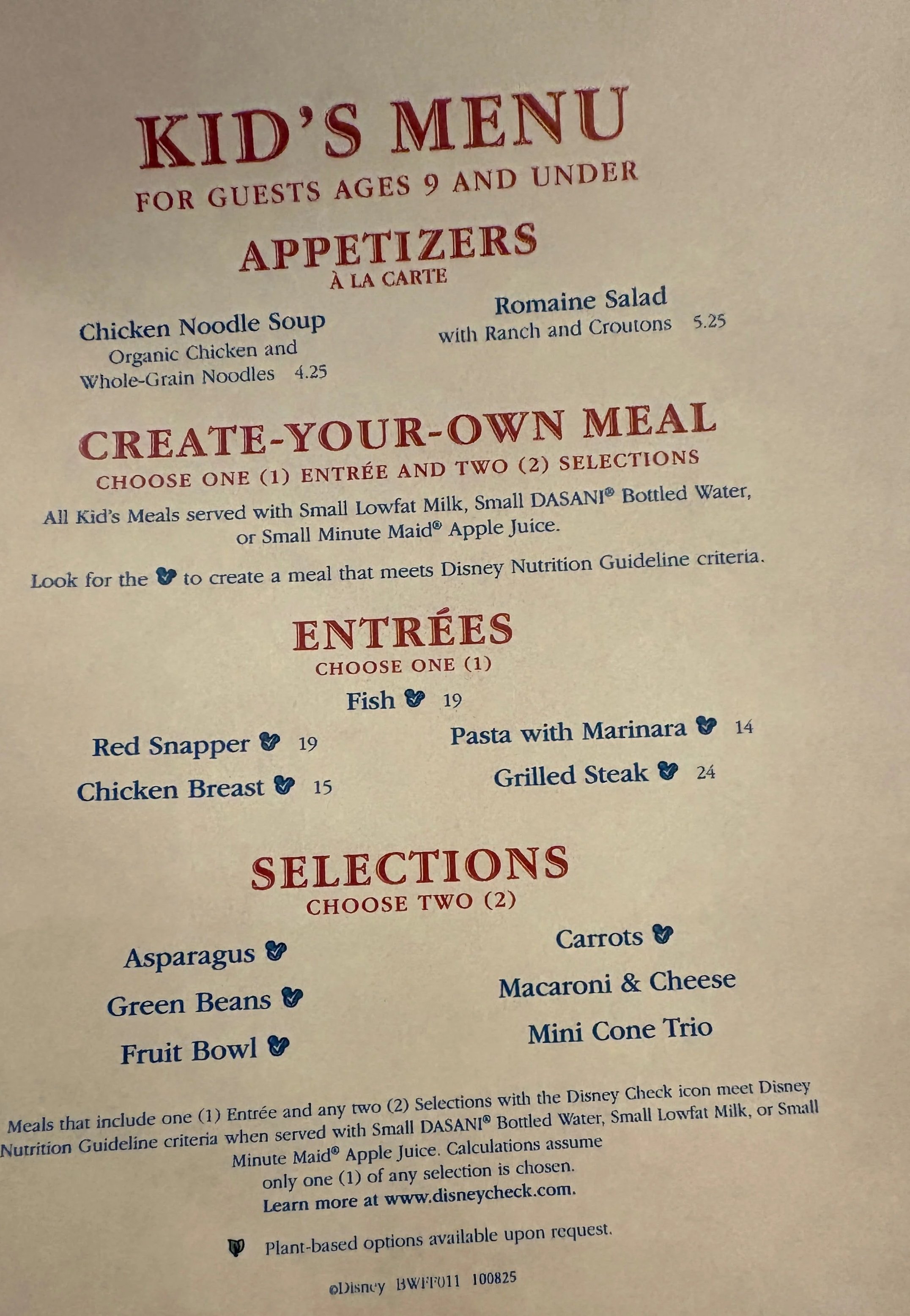
The children's menu at Flying Fish offered some genuinely good alternatives in smaller portions.
Flying Fish was a particularly good example. The children's menu included choices such as fish, red snapper, grilled steak and chicken, alongside vegetable sides including asparagus, green beans and carrots. This wasn't simply a choice between a cheeseburger and chips. She was perfectly happy choosing from that menu and eating bits from our plates as well.
Because we paid for that children's meal separately rather than redeeming an adult Dining Plan credit, it also meant we retained her adult Table-Service credits to use elsewhere. However, we didn't do this automatically.
At Sanaa, she wanted to eat from the adult menu, so she did. At Jiko, she chose from the children's menu but subsequently regretted that choice because the children's option wasn't as good for her.
We therefore looked at what she actually wanted to eat first. The credit implication came afterwards. That's an important distinction. We weren't giving her a smaller meal simply to maximise the Dining Plan. We were avoiding using an adult credit on a meal and portion size she didn't actually want. The fact that this also left credits available elsewhere became useful when we started incorporating two-credit restaurants into the holiday.
What About 2-Credit Restaurants?
Some Signature Dining restaurants and selected dining experiences require two Table-Service credits per person. That means a single meal can use the equivalent of two nights' Table-Service allocation.
We deliberately booked both Jiko – The Cooking Place and Flying Fish on our latest trip. We chose them because the menus appealed to us, but we also wanted to answer an obvious question: does a restaurant requiring two Dining Plan credits actually feel worth twice the credits? There are really two different questions here.
The first is whether the restaurant experience itself — the food, service and overall meal — justifies using two credits. That's something we're exploring in our Florida YouTube series, where you can actually see the meals and our experience rather than us reproducing the entire vlog in writing.
JIKO & FLYING FISH: ARE 2 DINING PLAN CREDITS WORTH IT? - coming soon to our Youtube Channel.
The second question is more strategic: how do you fit two-credit restaurants into a Dining Plan that gives you one Table-Service credit per person per night?
Do you use the credits and pay for another meal separately? Can you naturally build up spare credits elsewhere? Can Quick-Service and snack credits help you structure the surrounding days without feeling as though you've missed a meal?
We've done exactly that ourselves, so we're covering the strategy separately in (COMING SOON - How to Use the Disney Dining Plan With 2-Credit Restaurants)
That article looks at the whole holiday rather than judging one restaurant in isolation.
What About Quick-Service Credits?
Quick-Service credits are where we tend to keep much more flexibility.
There are days when we know roughly where we'll eat, but we don't generally want every Quick-Service meal built into a timetable before we've even left the UK.
Park days change, people get hungry at different times and sometimes a Table-Service meal closer to lunch time (see our character dining tips article) means nobody wants a large evening meal. Other days you might want something substantial earlier because dinner isn't until much later. That's where Quick-Service works well.
As our D-Luxe Burger and Blaze Pizza examples show, Quick-Service meals can vary considerably in their equivalent cash value. Again, we wouldn't travel across Walt Disney World purely to extract another few dollars from a credit. Convenience, what we actually want to eat and how the meal fits into the day matter too.
How We Use Snack Credits
Snack credits can cover a surprisingly wide range of eligible food and drinks across Walt Disney World, and there can be quite a difference in the cash value of what you get for one credit.
We've used them for coffees, drinks and treats during long park days, but we've also used a snack credit for a cake from Amorette's Patisserie at Disney Springs. Some eligible snacks can be around the $10 mark, which can make them a particularly good use of a single credit.
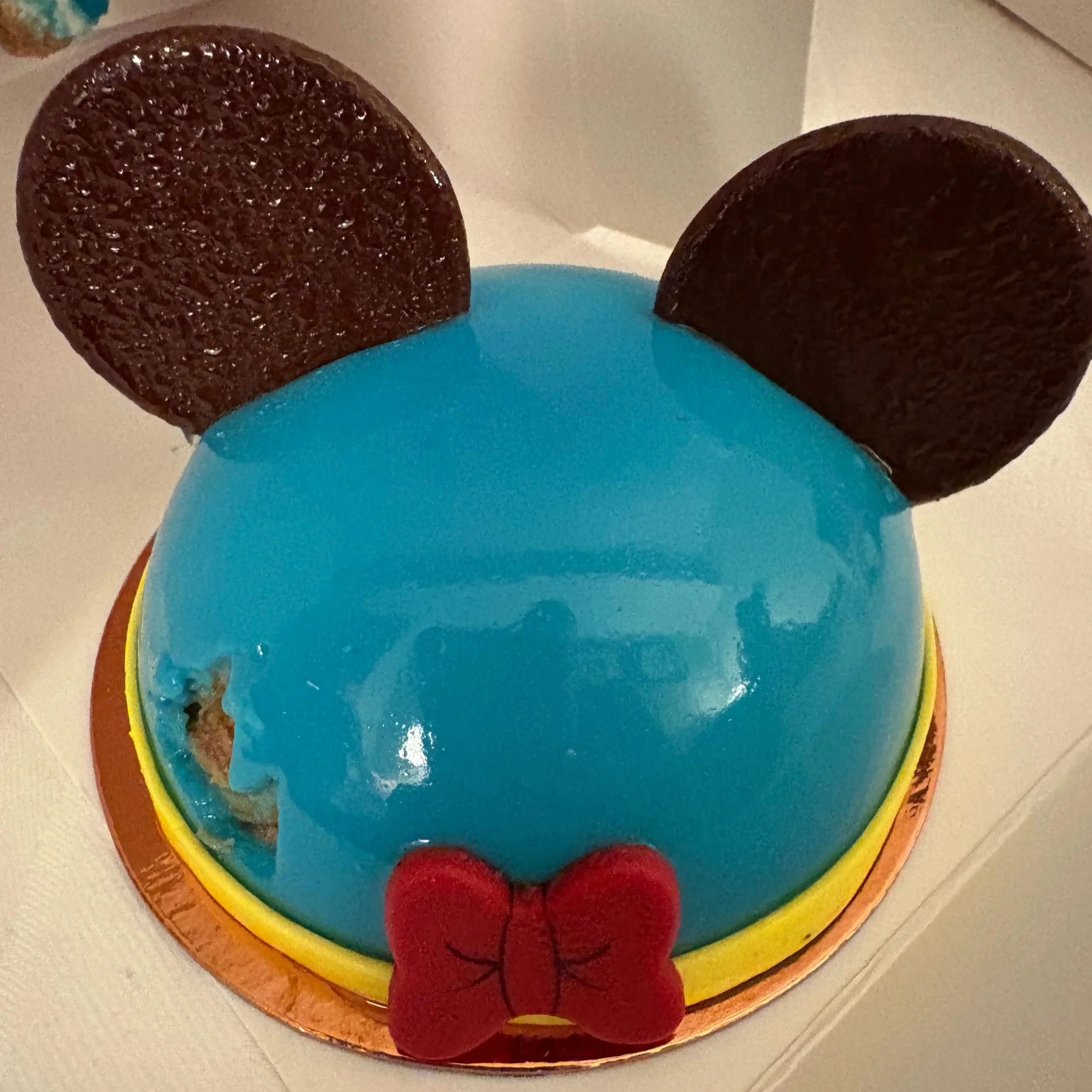
One of the Cakes from Amorette’s - a $10 use of a snack credit is great value.
That doesn't mean we'd spend the holiday hunting for the most expensive snack displaying the Dining Plan symbol. If we want a coffee and it's eligible, we'll use a credit. If there's a Disney snack we genuinely want to try, we'll use one there too.
It's simply worth knowing that not all snack-credit redemptions have the same cash value. If we're choosing between paying a few dollars for something inexpensive or using the same credit on an eligible snack approaching $10 that we genuinely want, we'd normally save the credit for the latter.
Snack credits can also work well around your planned Table-Service meals. A substantial lunch or character breakfast can change how hungry everyone is later, so a snack can sometimes bridge the gap rather than using a Quick-Service credit simply because you have one available.
For us, the balance is straightforward: know where a snack credit can offer good value, but don't spend your holiday chasing every last dollar from it.
Common Disney Dining Plan Mistakes
The biggest mistake is probably assuming that because something can be purchased with a credit, using a credit automatically represents good value. Sometimes paying separately for something inexpensive and retaining a credit makes more sense.
Another is booking restaurants purely because they're expensive. The objective isn't to produce the highest possible total at the bottom of a receipt. If you don't particularly want to eat there, the fact that you've extracted a high dollar value from a credit doesn't make it a good holiday decision.
It's also easy to over-plan. Table-Service meals need thought, particularly popular restaurants and character dining, but trying to schedule every Quick-Service meal and snack can remove one of the biggest benefits of the Dining Plan: flexibility.
Finally, remember that the Dining Plan doesn't necessarily mean every food-related expense disappears. Gratuities aren't included, and anything you order beyond the plan's inclusions will still need to be paid for separately.
When Does the Disney Dining Plan Work Well?
Based on how we've used it, the Disney Dining Plan makes particular sense for families who already expect to eat regularly at Table-Service restaurants, want to include some character dining or higher-cost meals, spend a significant proportion of their holiday on Disney property and value having much of their food accounted for before travelling. For us, those circumstances fit well.
We ate this way before we had the Dining Plan. That's why our previous food spending matters: the Dining Plan didn't persuade us to suddenly start booking expensive restaurants simply to manufacture value.
Those were restaurants and experiences we were already willing to pay for. Having those meals included within the right package therefore has genuine value to us.
When Might Paying As You Go Be Better?
If your family eats lightly, shares meals regularly, rarely wants Table-Service dining, spends significant time away from Walt Disney World or simply prefers less expensive Quick-Service options, we'd look carefully at whether paying as you go makes more sense.
Our Blaze Pizza example demonstrates that it is absolutely possible to feed a family at Disney for considerably less than some of our Table-Service receipts might suggest.
You should also think about the kind of holiday you want. A Table-Service meal can provide a welcome break during a long Florida park day, but some families would much rather grab something quickly and get back to the attractions. Neither approach is wrong. The Dining Plan only represents value if it fits the holiday you actually want to have.
So, Is the Disney Dining Plan Worth It for UK Families?
For us, yes — particularly when it's included as part of the right Disney package.
We've travelled without it and know what happens when our family eats naturally at Walt Disney World. We enjoy Table-Service restaurants, we've historically done a fair amount of character dining and we're now starting to use some of those credits for different experiences as our children get older.
Having much of that food cost accounted for before we arrive changes the experience.
Instead of arriving in Florida with potentially thousands of pounds of restaurant spending still ahead of us, we know that if we stay within what's included, the majority of those meals are already accounted for. We then need to budget separately for any extras we choose and gratuities if we decide to leave them. But we wouldn't tell every UK family to add the Dining Plan automatically. If you're paying extra for it, do the maths using your holiday rather than ours.
Look at the restaurants you genuinely want to eat in. Use our Complete Walt Disney World Character Dining Guide to see what some of those experiences have actually cost us. Think about how your children eat, how much time you'll spend away from Disney and whether Table-Service dining is something you genuinely value.
If you'd naturally eat more like our $60 Blaze Pizza example than some of our $200–$300+ Table-Service meals, your calculation could look completely different from ours.
The best Dining Plan strategy isn't necessarily the one that extracts the maximum theoretical value from every credit.
For us, it's much simpler than that: plan the Table-Service meals you genuinely want, use your Quick-Service and snack credits flexibly around the holiday, and make the Dining Plan work for your family rather than the other way around.
Disney Dining Plan FAQ
How many meals do you get on the Disney Dining Plan?
The standard Disney Dining Plan provides each eligible guest with one Table-Service meal, one Quick-Service meal and one snack or eligible non-alcoholic drink for each night of the eligible Disney Resort stay, plus a Resort-Refillable Drink Mug.
Do Dining Plan credits have to be used each day?
No. Your meals and snacks can be redeemed throughout the stay, so you don't have to use exactly the same number every day. Remaining allocations expire at midnight on your checkout day.
Are gratuities included in the Disney Dining Plan?
No. Gratuities are not included. Any gratuity you choose to leave should therefore be considered separately when planning your holiday spending.
Are alcoholic drinks included?
Guests aged 21 and over can choose an eligible alcoholic beverage with qualifying meals where available. Any additional drinks you order beyond what's included are paid for separately.
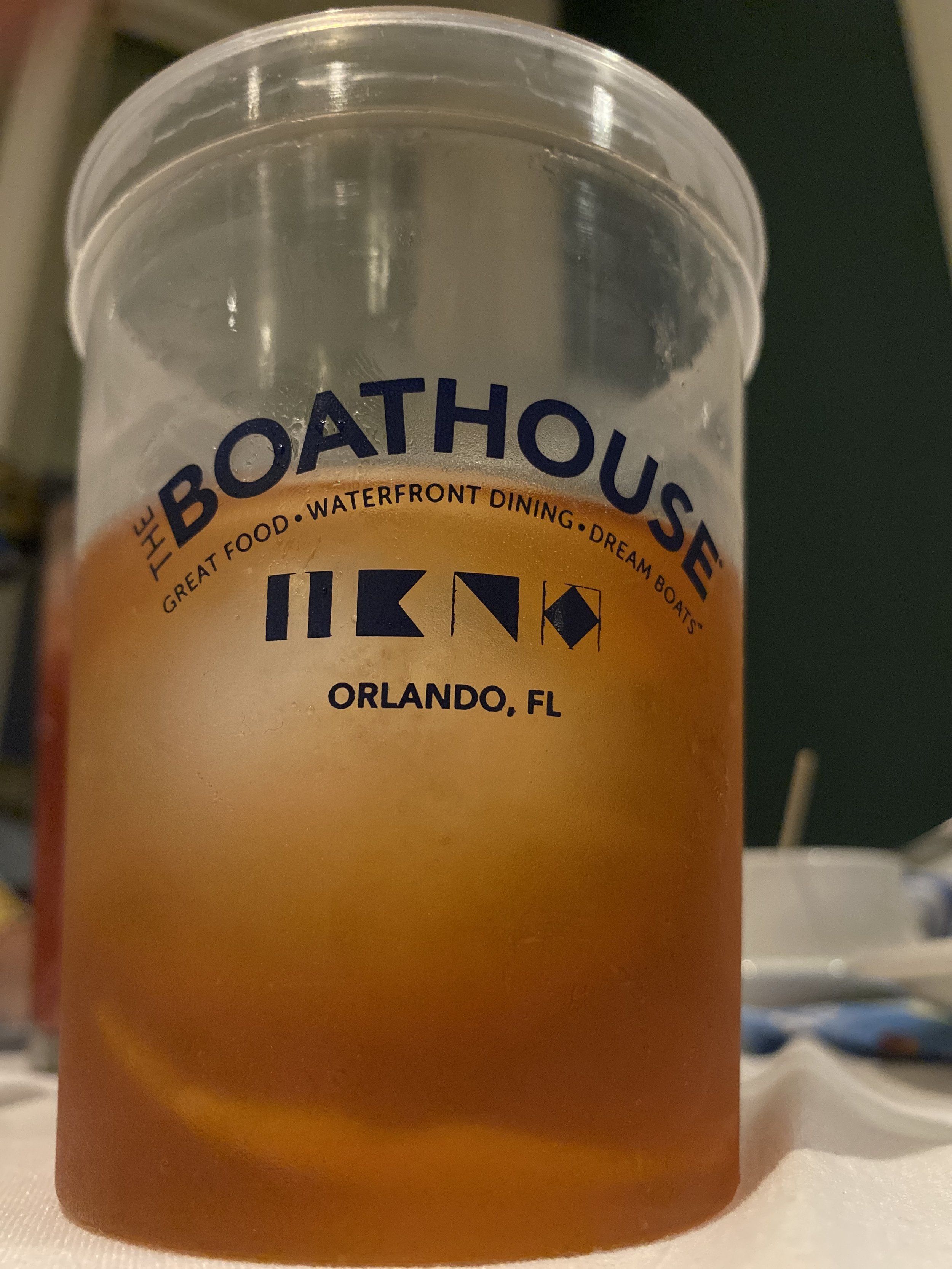
The Boathouse Old Fashioned
What age counts as an adult on the Disney Dining Plan?
Guests aged ten and over are treated as adults for Dining Plan purposes. Guests aged three to nine use the applicable children's Dining Plan entitlements.
Can some restaurants use two Table-Service credits?
Yes. Some Signature Dining restaurants and selected other dining experiences require two Table-Service credits per person. Check the requirements for the particular restaurant when planning your reservations, as participation and requirements can change.
Can you save Dining Plan credits for another day?
Yes. You don't have to use the same allocation each day. That's one of the things that gives you flexibility when planning different types of dining across the holiday.
Is character dining good value on the Dining Plan?
It can be, particularly because some character meals are expensive when paying for a family. However, we'd only consider it genuine value if you actually wanted to book the experience anyway.
We've included the prices we've paid alongside our first-hand experiences in our Complete Walt Disney World Character Dining Guide, which is useful when comparing character meals with other ways of using your Table-Service credits.
Is the Disney Dining Plan cheaper than paying for food yourself?
It can be, but it isn't guaranteed. The answer depends on the cost of your package, how your family eats and where you genuinely intend to dine.
If the Dining Plan is included in a UK package, compare the value of the complete package against your alternatives. If you're paying specifically to add it, calculate what the meals you realistically expect to eat would cost first.
What is the best way to use the Disney Dining Plan?
Our approach is to plan the Table-Service restaurants we genuinely want because those meals often need reservations, then use Quick-Service and snack credits much more flexibly around our park days.
We find that gives us the benefits of planning while still allowing the Dining Plan to fit around the holiday rather than allowing food to dictate everything else.